



Jane Salihu
The Federal Ministry of Works has declared that Nigeria’s quest for economic growth and sustainable national development cannot be achieved without massive and deliberate investment in critical infrastructure.
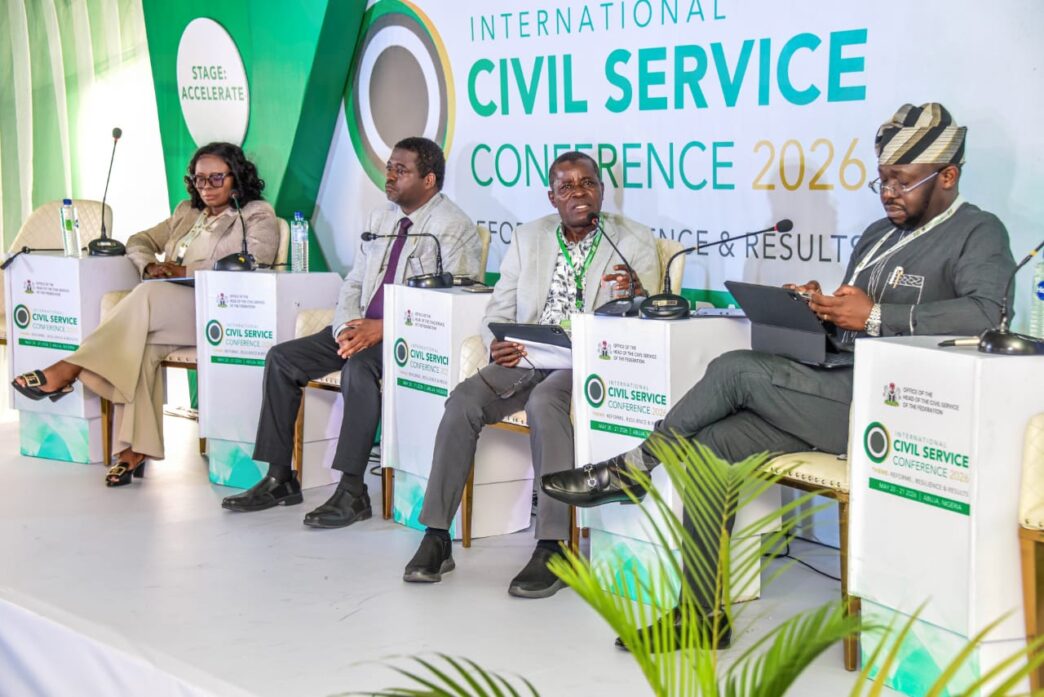
Speaking at the International Civil Service Conference 2026 in Abuja, the Permanent Secretary of the Ministry, Mr. Rafiu Olarinre Adeladan, said infrastructure remains the backbone of every thriving economy, stressing that nations that have recorded significant development did so through consistent investment in roads, transportation systems, power, and other strategic facilities.
Adeladan said the present administration has continued to place infrastructure and transportation at the centre of its development agenda because of their direct impact on economic productivity, trade, investment, and citizens’ welfare.
Drawing comparisons with countries such as the United States, the United Kingdom, Germany, and South Africa, the Permanent Secretary noted that sustainable economic progress is closely linked to strong infrastructure networks capable of supporting industrialisation and commercial activities.
According to him, efficient infrastructure improves agricultural productivity, eases the movement of goods and services, boosts commerce, and strengthens activities in critical sectors including oil and gas.
The Permanent Secretary also revealed that the Ministry has adopted Continuously Reinforced Concrete Pavement (CRCP) technology for road construction as part of efforts to build more resilient and climate-friendly roads across the country.
He explained that although concrete roads require higher initial investment, they offer long-term benefits, including durability, lower maintenance costs, environmental sustainability, and the ability to withstand heavy traffic for as long as 50 years.
Adeladan added that the technology would also stimulate local economic growth through the use of locally sourced materials and labour, thereby creating jobs and encouraging indigenous participation in infrastructure delivery.
Highlighting challenges confronting the sector, he identified inadequate funding as one of the biggest obstacles to addressing Nigeria’s infrastructure deficit, noting that government resources alone are insufficient to meet growing demands.
He said this reality has made Public-Private Partnerships and concession arrangements increasingly necessary for the execution and maintenance of major road projects nationwide.
The Permanent Secretary cited the Benin–Asaba Road and the Abuja–Keffi–Akwanga corridor as examples of projects already concessions to improve efficiency, ensure sustainable maintenance, and guarantee better service delivery.
He further stressed that infrastructure projects must be designed with sustainability, climate resilience, and the needs of host communities in mind to ensure long-term socio-economic benefits.
Other speakers at the conference also called for improved planning, climate-conscious infrastructure policies, and stronger private sector participation in national development.
Permanent Secretary, State House, Mr. Temitope Peter Fashedemi, emphasised the need for proactive planning to reduce the impact of flooding, erosion, and poor maintenance culture on public infrastructure.
Similarly, the Permanent Secretary of the Federal Ministry of Water Resources and Sanitation, Dr. Emanso Umobong, advocated the adoption of technology-driven infrastructure systems, smart city initiatives, and community participation in project implementation.
In his remarks, the Director-General and Chief Executive Officer of the Infrastructure Concession Regulatory Commission (ICRC) said Nigeria’s huge infrastructure financing gap requires stronger collaboration with the private sector and policies that encourage investor confidence.
The conference attracted government officials, development experts, policymakers, and stakeholders from across sectors to discuss innovative strategies for sustainable infrastructure delivery and national development





GIPHY App Key not set. Please check settings