


By Janet Salihu
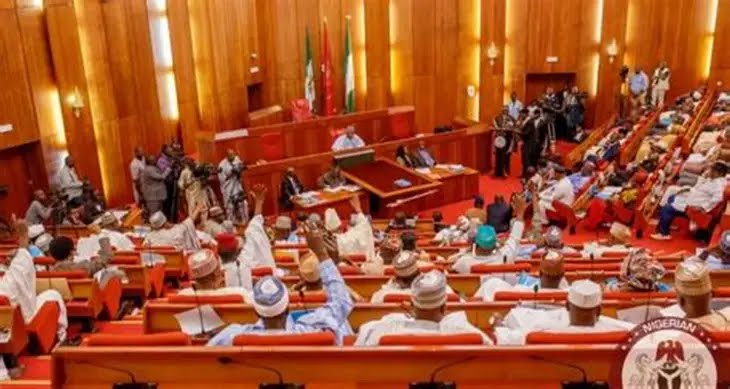
The Senate on Thursday recorded a major milestone in the ongoing efforts to reform Nigeria’s security architecture as lawmakers overwhelmingly supported a bill seeking the establishment of state police across the federation, allowing it to scale second reading.
The proposed legislation, which seeks to decentralise policing and grant subnational governments greater responsibility in maintaining internal security, received broad support from senators across party lines during deliberations on the floor of the Red Chamber.
Following the debate, President of the Senate, Senator Godswill Akpabio, referred the bill to the Senate Ad-hoc Committee on the Review of the 1999 Constitution for further legislative consideration.
Leading the debate, Senate Leader, Senator Opeyemi Bamidele, said the bill was designed to strengthen Nigeria’s security framework and provide a more effective response to the country’s growing security challenges.
He noted that the nation continues to contend with terrorism, banditry, kidnapping, farmer-herder conflicts, armed robbery, communal violence, cult-related activities, pipeline vandalism, economic sabotage and emerging cyber-enabled crimes.
According to him, increasing calls by Nigerians for the creation of state police reflect concerns over the limitations of the current centralised policing structure in addressing local and community-based security threats.
Bamidele explained that the bill seeks to establish federal and state police structures with clearly defined responsibilities, while also transferring policing matters from the Exclusive Legislative List to the Concurrent Legislative List.
He said the proposed legislation would create State Police Service Commissions, strengthen accountability mechanisms and promote cooperative federalism in security administration.
The Senate Leader dismissed fears that state police could be abused by state governments, stressing that the bill contains adequate constitutional safeguards to prevent misuse.
He listed the safeguards to include the establishment of independent State Police Service Commissions, federal oversight through the Federal Police Service Commission, uniform national policing standards, legislative confirmation of senior appointments, constitutional procedures for the removal of state commissioners of police, periodic operational reviews and federal intervention in situations where law and order completely break down.
Bamidele argued that effective security management is best achieved at the local level, where officers possess a better understanding of the terrain, language, culture and peculiar security dynamics of their communities.
He added that the establishment of state police would improve intelligence gathering, facilitate quicker responses to security threats, deepen community policing and strengthen public confidence in law enforcement institutions.
The lawmaker further stated that decentralised policing would enable the Nigeria Police Force to focus more on interstate crimes, terrorism, organised criminal networks, border security, cybercrime and other national security concerns.
Drawing comparisons with other federal systems around the world, Bamidele noted that countries such as the United States, Canada, Australia and Germany successfully operate multi-layered policing structures involving both federal and subnational law enforcement agencies.
Contributing to the debate, Chief Whip of the Senate, Senator Tahir Monguno, expressed strong support for the bill, describing it as a necessary legal framework that would regulate and coordinate the activities of various vigilante groups operating across the country.
He said the proposed legislation would strengthen grassroots security management while ensuring professionalism, accountability and effective oversight of state police formations.
Most senators who spoke during the debate, particularly from the northern region, endorsed the proposal, expressing optimism that state police would help address persistent security challenges and enhance the protection of lives and property across the country.
The bill will now undergo further scrutiny by the Constitution Review Committee before returning to the Senate for subsequent legislative action.












GIPHY App Key not set. Please check settings