

Jane Salihu
The strongest angle is INEC’s new technological safeguard against result manipulation, particularly its assurance that results containing inaccuracies or over-voting will not be uploaded to IReV. This gives the story a sharper accountability angle while bringing the November 28 mock election into focus as a major test ahead of 2027.
The Independent National Electoral Commission (INEC) says it has introduced new technical safeguards to prevent inaccurate election results and figures indicating over-voting from being uploaded to its Result Viewing Portal (IReV) ahead of the 2027 general elections.
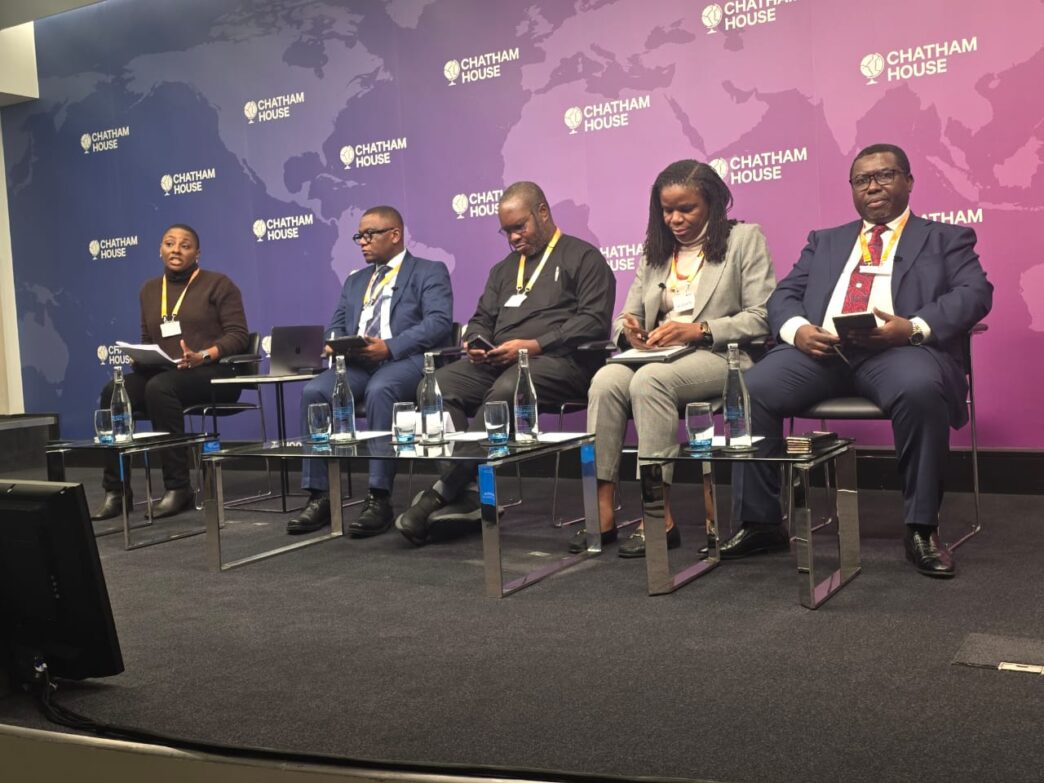
The INEC Chairman, Prof. Joash Amupitan, SAN, disclosed this on Thursday during a high-level dialogue organised in partnership with the Kimpact Development Initiative (KDI) at Chatham House, London, where he outlined measures being introduced to address weaknesses exposed by the 2023 general elections.
Amupitan said the new safeguards were designed to eliminate discrepancies between polling unit results and figures recorded at collation centres, which the Commission’s post-election assessment identified as a major source of electoral irregularities in 2023.
He explained that under the upgraded system, results containing inaccuracies or figures reflecting over-voting would be rejected and prevented from appearing on IReV.
“In 2023, there were instances of inaccurate results or results with over-voting being uploaded onto IReV. We have now devised a technical safeguard: if a result is not accurate at the polling unit, it will not go to IReV at all,” he said.
The INEC chairman said the Commission had identified result management, insecurity and logistics as its three major operational priorities ahead of the 2027 elections.
He noted that rather than introduce an entirely new electoral technology within the limited time available, INEC had opted to upgrade and strengthen its existing infrastructure.
As part of efforts to address technical challenges associated with the Bimodal Voter Accreditation System (BVAS), particularly malfunctions linked to extreme heat and poor storage conditions during the 2023 elections, Amupitan said the Commission was constructing climate-controlled storage facilities across the 36 states and the Federal Capital Territory.
He added that INEC had procured additional BVAS devices and reduced the maximum number of registered voters assigned to each machine from 1,250 to 850.
According to him, polling units with more than 850 registered voters will be provided with multiple devices to minimise delays and ensure smoother accreditation.
To assess the effectiveness of the upgrades, the INEC chairman announced that the Commission would conduct a nationwide mock accreditation and voting exercise on November 28, 2026.
He said the exercise would simulate the presidential election process and test the Commission’s preparedness in voter accreditation and electronic transmission of results.
On funding, Amupitan disclosed that INEC had received a substantial portion of its 2027 election budget but was still awaiting the release of the outstanding balance, part of which would be used for the recruitment and welfare of ad hoc election personnel.
He said the Commission had received assurances that the outstanding funds would be released before the end of November.
Addressing concerns over public confidence in the electoral process, the chairman acknowledged that the controversies surrounding the 2023 presidential election had significantly damaged INEC’s credibility.
He, however, argued that improvements recorded in subsequent off-cycle elections demonstrated the Commission’s efforts to address identified shortcomings.
He cited the Anambra and Osun governorship elections, Federal Capital Territory Area Council polls, Ekiti governorship election and 16 legislative by-elections as practical opportunities through which the Commission had tested and improved its operations.
According to him, the recent governorship elections in Anambra and Osun recorded improvements in result declaration, with outcomes announced the day after voting, unlike previous experiences involving prolonged and inconclusive processes.
On allegations questioning his political neutrality, including claims linking his telephone number to a controversial X account, Amupitan denied operating any account on the platform.
He said an independent forensic review had been obtained and the matter referred to the Department of State Services and the Inspector-General of Police for investigation.
The INEC chairman also dismissed concerns that his previous legal engagements in political disputes could affect his impartiality, insisting that his loyalty remained with the Constitution and the Electoral Act.
He urged Nigerians, particularly young people, to remain actively involved in the democratic process and guard against misinformation and digital disinformation capable of undermining public confidence in elections.
The 2027 Presidential and National Assembly elections are scheduled for January 16, 2027, while governorship and State Houses of Assembly elections will hold on February 6, 2027.



GIPHY App Key not set. Please check settings