

Jane Salihu
The Independent National Electoral Commission (INEC) and the Office of the National Security Adviser (ONSA) have moved to strengthen grassroots security coordination ahead of the 2027 general elections, with a renewed call for security agencies to prevent violence, protect electoral officials and ensure voters exercise their rights without intimidation.
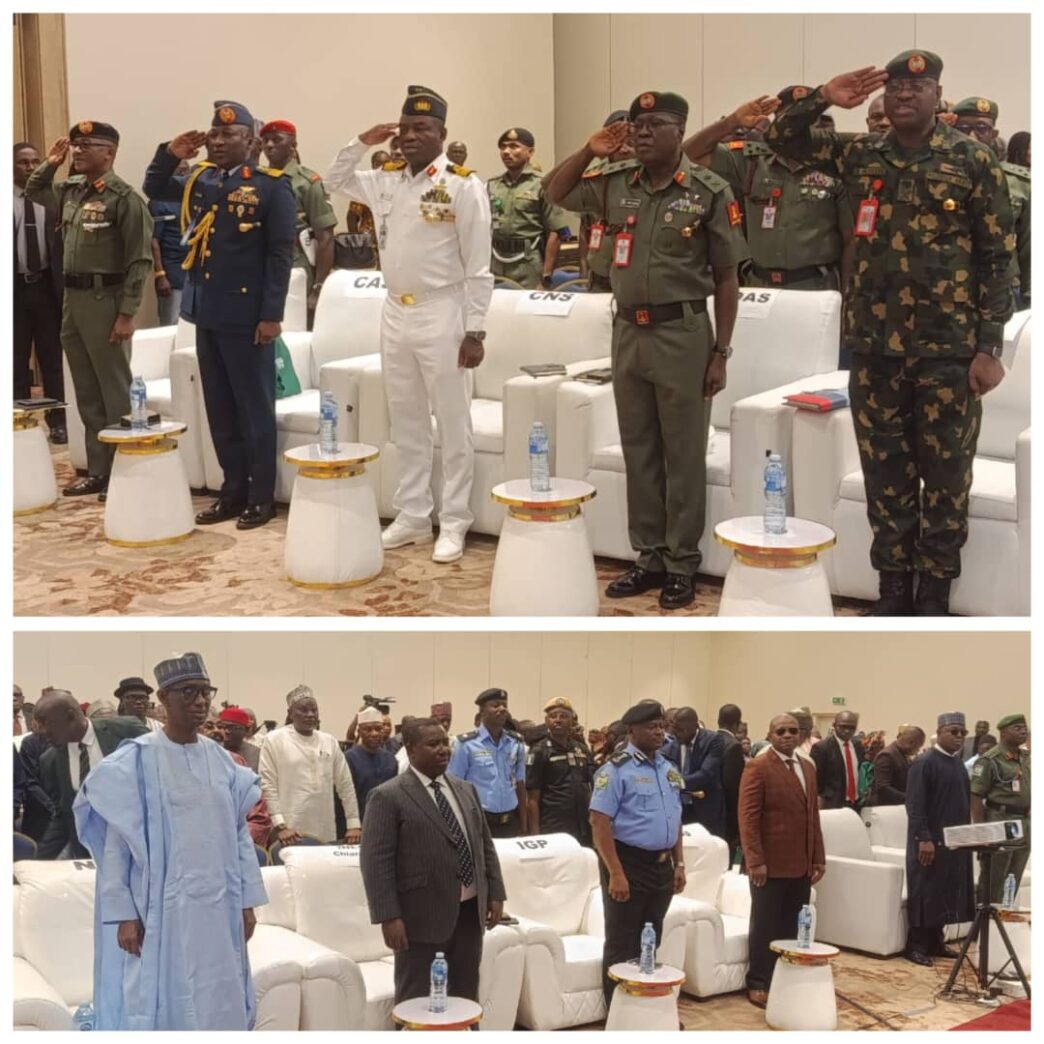
INEC Chairman, Professor Joash Amupitan, and the National Security Adviser, Mallam Nuhu Ribadu, made the call on Thursday at the INEC–ONSA Strategic Election Security Conference in Abuja.
Amupitan said the Commission was strengthening the Inter-Agency Consultative Committee on Election Security (ICCES) through a decentralised coordination framework that would extend security collaboration from the national level to states, local government areas and wards.
He explained that the initiative would ensure closer working relationships between Resident Electoral Commissioners and Commissioners of Police at the state level, while electoral officers and local security commanders would establish direct communication channels to facilitate prompt responses to emerging threats.
The INEC chairman identified political violence, attacks on electoral personnel and the growing use of misinformation as major concerns ahead of the elections, warning that insecurity could discourage voter participation and undermine the credibility of the electoral process.
He also called on political parties and their leaders to take responsibility for the conduct of their supporters, stressing that attacks on INEC officials and facilities would not be tolerated.
Amupitan further disclosed that the Commission would deploy more than 1.41 million ad hoc personnel across 177,299 polling units, alongside 57,000 newly procured Bimodal Voter Accreditation System (BVAS) devices, requiring adequate security arrangements for personnel and election materials.
In his remarks, Ribadu assured Nigerians of the Federal Government’s commitment to providing the security needed for peaceful, transparent and credible elections, declaring that security agencies would discharge their responsibilities without political bias.
He said the administration of President Bola Ahmed Tinubu was committed to protecting voters, electoral officials, politicians and other stakeholders before, during and after the elections.
The NSA stressed that the constitutional independence of INEC must be respected, adding that security agencies would operate impartially and within the provisions of the law.
He also emphasised the importance of allowing political parties, candidates, observers, journalists and citizens to carry out their lawful activities without intimidation or interference.
Ribadu described the media as a critical stakeholder in the electoral process, noting that its contribution to transparency and accountability was essential to building public confidence in elections.
He observed that the growing number of registered voters could indicate increasing public confidence in the electoral system, urging stakeholders to sustain the improvements recorded in the country’s democratic process.
However, he expressed concern over the growing influence of social media and artificial intelligence in spreading misinformation, warning that false narratives circulated online could trigger tension and violence even when they originated from individuals in remote communities.
He called for stronger early-warning mechanisms and proactive security assessments to identify emerging threats and address potential flashpoints before they escalate.
The NSA also urged political actors to embrace tolerance and responsible conduct, noting that the desperation associated with the struggle for political power must not be allowed to threaten the safety and democratic rights of Nigerians.
He challenged all stakeholders to translate the outcome of the conference into practical actions, urging electoral officials to protect the integrity of the process, security agencies to prevent violence and political parties to conduct their activities peacefully.
Nigeria’s 2027 presidential and National Assembly elections are scheduled for January 16, while governorship and State Houses of Assembly elections will hold on February 6, 2027.

GIPHY App Key not set. Please check settings