


Jane Salihu
The Federal Government has returned more than one million out-of-school children to classrooms within two years.
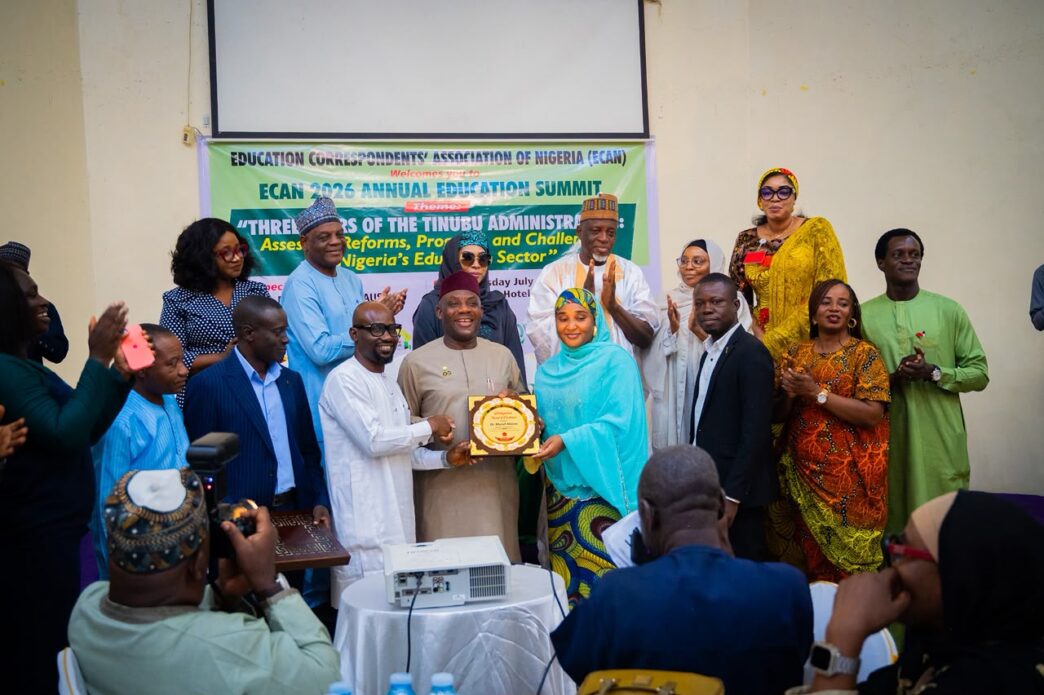
Minister of Education Dr. Tunji Alausa stated this yesterday at the 2026 Annual Education Summit in Abuja.
The success stemmed from evidence-based interventions rather than assumptions, Alausa told journalists at the summit organised by the Education Correspondents Association of Nigeria (ECAN).
While the achievement represents significant progress, the minister acknowledged that millions more remain outside the formal education system.
The Ministry of Education is collaborating with the National Bureau of Statistics on a nationwide household survey to establish Nigeria’s actual out-of-school population and develop targeted solutions.
Inadequate access to junior secondary education emerged as the sector’s biggest structural challenge.
Nigeria has approximately 90,000 primary schools but only 16,000 junior secondary schools. About 25 million pupils are enrolled in primary schools, but only five million transition to junior secondary education—a disparity indicating that access, not enrolment, is the core problem.
“The data is there for everyone to use. It enables journalists to interrogate education outcomes, challenge policymakers where necessary and ensure public resources are effectively utilised,” Alausa said.
He unveiled the Federal Ministry of Education’s Digitalised Nigeria Education Management Information System (DNEMIS), which provides real-time information on school enrolment, classroom availability, teacher distribution and infrastructure nationwide. Alausa urged education correspondents to use the platform to track government performance and expose gaps in service delivery.
Preliminary findings from the 2024/2025 Annual School Census are already shaping policy decisions, he added.
Minister of State for Education Prof. Suwaiba Ahmad described ongoing changes as a comprehensive transformation agenda. The Nigerian Education Sector Renewal Initiative is driving reforms in teacher development, curriculum review, digital learning, STEM education, technical and vocational training, quality assurance and institutional governance.
Executive Secretary of the Universal Basic Education Commission (UBEC) Dr. Aisha Garba said every Nigerian child deserves the opportunity to learn irrespective of social or geographical background.



GIPHY App Key not set. Please check settings