


Jane Salihu
The leadership of the Economic Community of West African States (ECOWAS) has called for stronger institutional collaboration, effective parliamentary oversight and improved accountability as key measures to deepen regional integration and address mounting security, economic and governance challenges confronting West Africa.
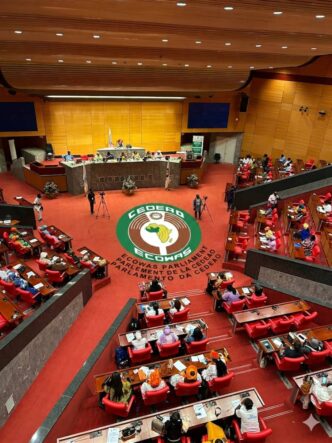
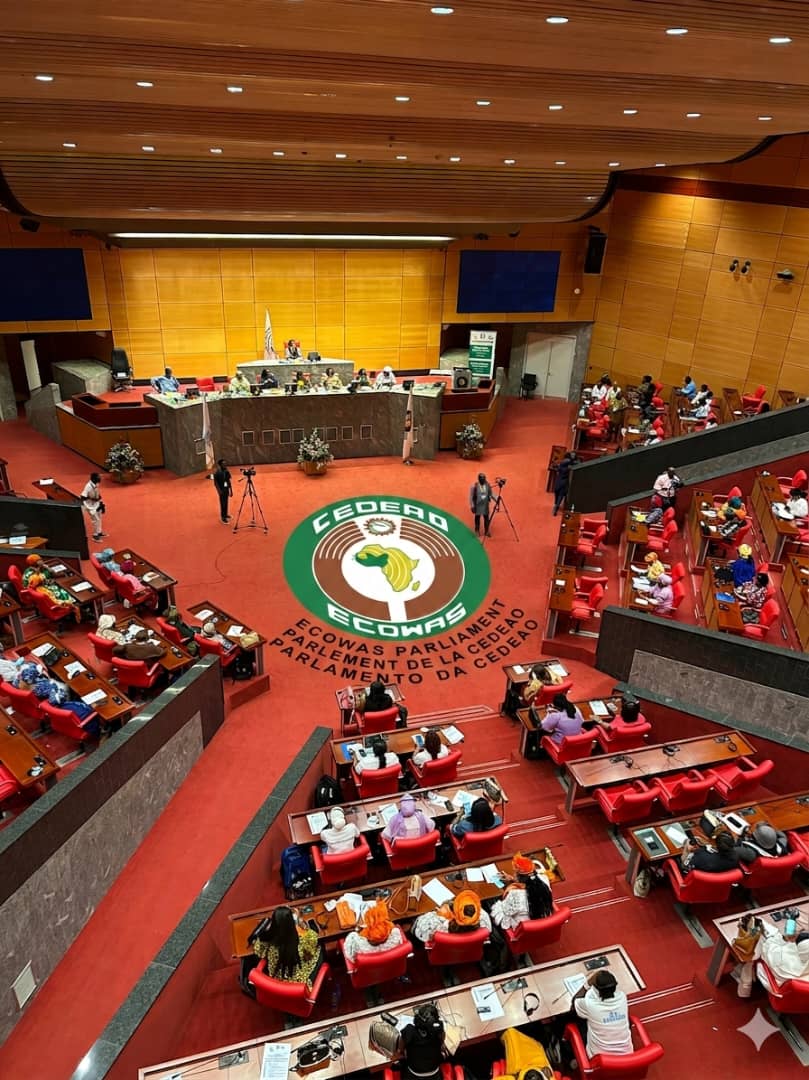
The call was made by the Speaker of the ECOWAS Parliament, Hajia Memounatu Ibrahima; President of the ECOWAS Commission, Birame Diop; and President of the ECOWAS Court of Justice, Justice Charlyne Brumskine, during the opening of the Second Ordinary Session of the ECOWAS Parliament for 2026.
In her opening address, the Speaker, Hajia Memounatu Ibrahima, stressed that the complexity of challenges facing the region required stronger cooperation among Community institutions, noting that no single institution could independently address the economic, security, social, climate and technological vulnerabilities confronting Member States.
She said the Parliament must move beyond being an observer of regional developments to becoming a stronger political voice of the people, with greater legislative and oversight influence in shaping policies that directly affect citizens.
Ibrahima highlighted the significance of the Lungi Declaration, which reaffirmed the commitment of ECOWAS Heads of State and Government to strengthening the legislative and oversight functions of the Parliament.
She maintained that sustainable regional integration depended on legitimate institutions, public trust, democracy, justice and respect for the rule of law.
The Speaker also drew attention to the 2027 Community Budget, describing its consideration as one of the major priorities of the session amid growing financial pressures and increasing development needs across the region.
She urged lawmakers to ensure that budgetary allocations were tied to clearly established needs, measurable impact and tangible benefits for citizens.
Ibrahima further called on national parliaments to intensify advocacy with their respective governments to ensure the systematic collection and remittance of the Community Levy, warning that the resources entrusted to ECOWAS institutions represented both the collective contributions and expectations of West African citizens.
On the democratic front, she commended Cabo Verde for its peaceful electoral process and congratulated President José Maria Neves on his re-election, while expressing hope that forthcoming elections in The Gambia and Nigeria would strengthen democratic governance, peace and stability.
In his address, President of the ECOWAS Commission, Birame Diop, called for renewed regional solidarity and stronger parliamentary diplomacy, arguing that the challenges confronting West Africa made regional cooperation more important than ever.
He noted that geopolitical rivalries, economic uncertainties, security threats and competing demands for development financing had further exposed the limitations of individual national responses, stressing that regional integration remained essential to addressing shared challenges.
Diop identified terrorism and insecurity in the Sahel and their growing implications for coastal states as major concerns requiring coordinated regional action.
He also called for renewed engagement with international partners, particularly the United States, to develop pragmatic security cooperation, strengthen border safety and promote the free movement of people.
The Commission President emphasised that West Africa’s economic potential, supported by a population of more than 400 million people, abundant natural resources, agricultural opportunities and a growing entrepreneurial base, could only be fully realised through interconnected markets and the removal of barriers to trade.
He said ECOWAS was prioritising trade liberalisation, the elimination of tariff and non-tariff barriers, improved customs procedures, digitalisation, industrialisation and the development of regional value chains.
However, he stressed that regional integration must translate into practical benefits for traders, farmers, entrepreneurs, young people and ordinary citizens rather than remain confined to policy discussions and institutional commitments.
Diop also underscored the importance of strengthening the ECOWAS Parliament, describing it as a critical bridge between regional institutions and citizens.
He said the Commission’s proposed strategic direction, which he described as Agenda 2050, would require the collective efforts of all Community institutions, adding that the Parliament’s legislative, advisory and oversight responsibilities were central to achieving the region’s long-term aspirations.
He further urged lawmakers to support efforts towards peace and security, economic and monetary integration, sustainable development, human capital development, gender inclusion and digital transformation.
The President of the ECOWAS Court of Justice, Justice Charlyne . Brumskine of Liberia, called for stronger collaboration between the judiciary and Parliament, particularly in ensuring compliance with and enforcement of the Court’s judgments across Member States.
Brumskine described the Parliament and the Court as complementary institutions serving the same purpose of advancing regional integration and the welfare of West African citizens, noting that while Parliament provides citizens with representation and a voice, the Court offers legal protection and remedies for violations of their rights.
She stressed that the credibility of the Court depended largely on the enforcement of its judgments, urging lawmakers to encourage Member States to comply with its decisions and support the domestication of Community legal instruments to ensure that citizens can effectively access justice.
The Court President also highlighted the institution’s Justice 2030 strategic roadmap, aimed at bringing the Court closer to citizens, particularly women, while emphasising the need for adequate and predictable funding, qualified personnel and modern infrastructure to strengthen its judicial operations.
She proposed regular institutional dialogue with Parliament, periodic briefings on the Court’s activities and jurisprudence, and greater support for the enforcement of its judgments, reaffirming the Court’s commitment to a stronger partnership with the Parliament and other ECOWAS institutions.
The Second Ordinary Session of the ECOWAS Parliament will feature the presentation of the Commission President’s strategic plan and Report on the State of the Community, country reports, parliamentary oversight reports and the consideration of the proposed 2027 Community Budget.
Other issues scheduled for consideration include regional trade facilitation, the ECOWAS Mission in The Gambia, agricultural development projects and efforts to strengthen the regional electricity market.
The three addresses collectively highlighted the need for ECOWAS institutions to move beyond individual mandates and strengthen cooperation, accountability and service delivery in pursuit of a more integrated, peaceful and prosperous West Africa.
GIPHY App Key not set. Please check settings