


Jane Salihu
The Federal Government’s investment in modernising 38 federal and state technical colleges across the country is strengthening practical skills acquisition and creating new pathways to economic independence for Nigerian youths, with some beneficiaries already turning vocational training into income-generating ventures.
The intervention, supported by the World Bank through the Innovation Development and Effectiveness in the Acquisition of Skills (IDEAS) Project, forms part of President Bola Tinubu’s administration’s efforts, under the leadership of the Minister of Education, Dr Tunji Alausa, to reposition technical and vocational education as a tool for tackling unemployment, reducing poverty and developing a skilled workforce.
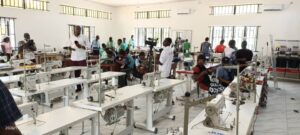

At the Federal Science and Technical College (FSTC), Orozo, Abuja, one of the institutions benefiting from the intervention, newly constructed and equipped workshops are providing students and short-term trainees with opportunities to acquire practical skills in different technical and vocational trades.
The Principal of the college, Dr Stella Uhuegbu, said the institution had adopted the Federal Government’s revised TVET curriculum, which places 70 per cent emphasis on practical training and 30 per cent on theoretical instruction.
She disclosed that the college had more than 1,000 regular students, while its six-month short-term skills programme accommodated over 1,000 trainees across five training cohorts.
The available trades include information and communication technology, automobile mechanics, auto-electrical repairs, catering, garment making and GSM repairs.
Uhuegbu described the IDEAS Project as critical to the success of the Federal Government’s TVET agenda, noting that the newly constructed and equipped workshops had significantly improved the institution’s capacity to deliver practical training.
“All the workshops you are seeing here were newly built and well equipped. The essence is to ensure that the skills training aspect of the TVET initiative is achieved because, without the workshops and equipment, we cannot effectively impact skills on the trainees,” she said.
She added that trainees would receive certificates upon completion of their programmes, alongside starter packs promised by the Federal Government to help them establish businesses in their respective trades.
The benefits of the programme are also extending to technical trades, with beneficiaries expressing satisfaction with the opportunity to acquire modern skills and improve their professional competence.
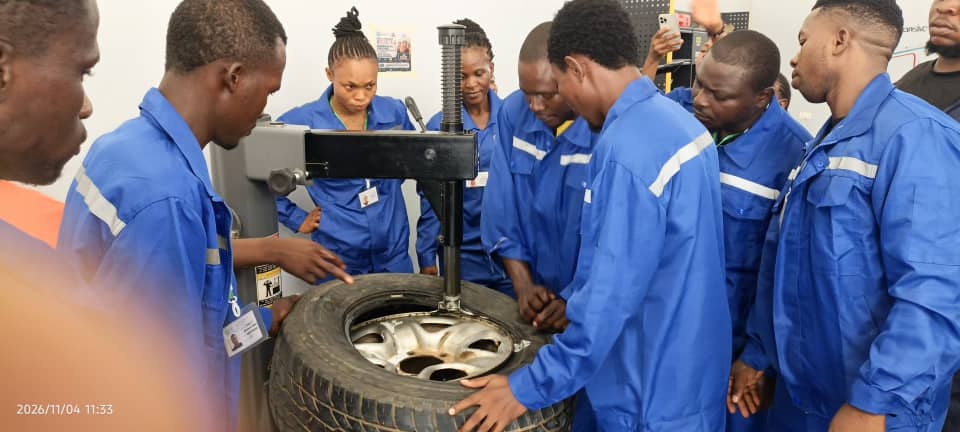
One of the trainees, Sandy Abraham, a visually impaired participant in the automobile training programme, described the experience as an opportunity to improve his existing knowledge of tyre repairs through modern techniques.
Abraham, who had previously acquired informal experience in tyre repairs, said the training had exposed him to professional procedures, including wheel alignment, wheel balancing and proper tyre maintenance.
He explained that the knowledge would improve his technical competence and enable him to contribute meaningfully to the automobile industry.
He attributed his ability to practise the trade despite his visual impairment to determination, passion and previous experience, adding that the training had further broadened his knowledge.
Another beneficiary, Gregory Jude Ogwu, said his six-month training in automobile mechanics had equipped him with knowledge of vehicle components, combustion processes, safety precautions and the proper use of mechanical tools.
He expressed appreciation to the Federal Government for providing an opportunity to acquire practical skills that could make him economically productive.
Beyond the federal technical college, another centre visited in Orozo was the Zenou TVET Centre, where trainees are also acquiring vocational skills with prospects of establishing businesses and becoming economically self-reliant.
One of the beneficiaries, Joy Genesis, said the training had already begun yielding financial benefits, disclosing that she started receiving orders for wedding and birthday cakes barely four to five months after enrolling in the programme.
Genesis said she had acquired skills in cake production and decoration, meat pie production, bread-making, pastries and confectionery, alongside the preparation of different snacks.
She listed some of the products she had learnt to make as coconut bread, fruit bread, honey bread, bread rolls, coconut candy, buns, egg rolls, Scotch eggs and shawarma.
According to her, the practical nature of the training had given her the confidence to produce different items independently and take commercial orders.
“Our work here is hands-on. We did the practicals by ourselves, and we go home and practise,” she said.
She added that the skills acquired had already begun generating income, disclosing that she had received orders for wedding and birthday cakes.
“Since I started, I’ve had wedding cakes and birthday cakes. I even had a birthday cake this weekend that just passed,” she said.
The National Project Coordinator of the IDEAS Project, Mrs Blessing Ehi Ogwu, said the Federal Government, with support from the World Bank, had provided funding and facilities for 38 federal and state technical colleges to strengthen practical skills acquisition.
She explained that the intervention covered 20 federal and 18 state technical colleges, with the facilities designed to improve technical training and provide young Nigerians with the competencies required for employment and entrepreneurship.
Ogwu said the initiative reflected the Federal Government’s determination to reposition technical and vocational education as a major instrument for reducing unemployment and poverty, particularly among young people.
“The Federal Government is interested in TVET education. That is why we have about 38 technical colleges that the Federal Government has funded and equipped like this, all to enhance skills,” she said.
She noted that the programme provided opportunities for both formal and informal skills training, adding that FSTC Orozo was the designated federal technical college serving the Federal Capital Territory.
Also speaking, the National Project Monitoring Officer in the Minister’s Office at the Federal Ministry of Education, Mr Olatunji Odewunmi, described the IDEAS Project and the broader TVET initiative as complementary interventions aimed at expanding access to practical skills training nationwide.
He said the country had more than 1,000 TVET centres, including about 140 skills training centres across the FCT.
Odewunmi explained that the Federal Government was covering the cost of tuition, training fees and instructional materials, while beneficiaries also received monthly stipends to support their participation.
He added that successful trainees would receive starter packs upon completion of their programmes to enable them to establish businesses and begin earning a livelihood.
According to him, the programme also incorporates monitoring and accountability measures to ensure that beneficiaries participate actively and government resources are properly utilised.
He disclosed that biometric attendance monitoring had been introduced, explaining that trainees who failed to meet the required attendance threshold could lose their stipends and eligibility for starter packs.
The monitoring officer said project officials also visited participating centres regularly to assess training activities and ensure that government resources were properly utilised.
With investments in modern workshops, training equipment, free tuition, monthly stipends and post-training starter packs, the Tinubu administration is seeking to expand opportunities for young Nigerians to acquire marketable skills, establish businesses and contribute to national development.
The experiences of beneficiaries at the Orozo centres demonstrate how practical education can provide an alternative pathway to economic independence, with some trainees already progressing from learning new trades to attracting customers and generating income within months of enrolment



GIPHY App Key not set. Please check settings