

By Jane Salihu
The Federal Government has opened a fresh front in the battle against illiteracy, unveiling measures to expand access to education for young people and adults while strengthening the National Commission for Mass Literacy, Adult and Non-Formal Education (NMEC) to drive the campaign nationwide.
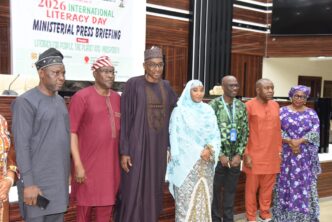
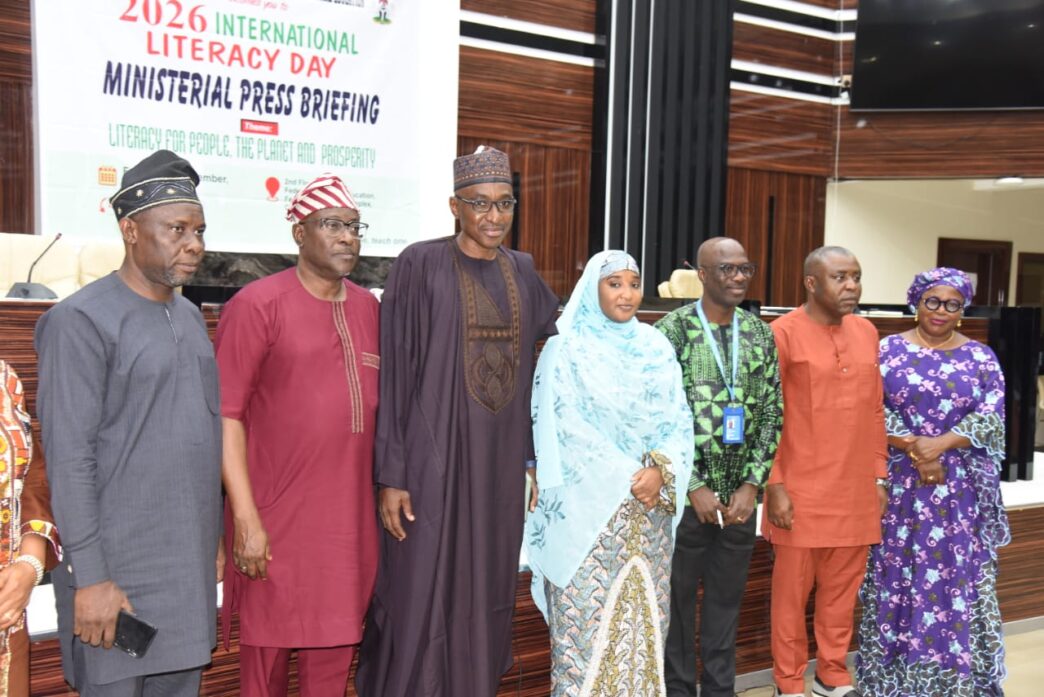
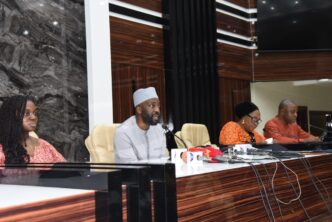
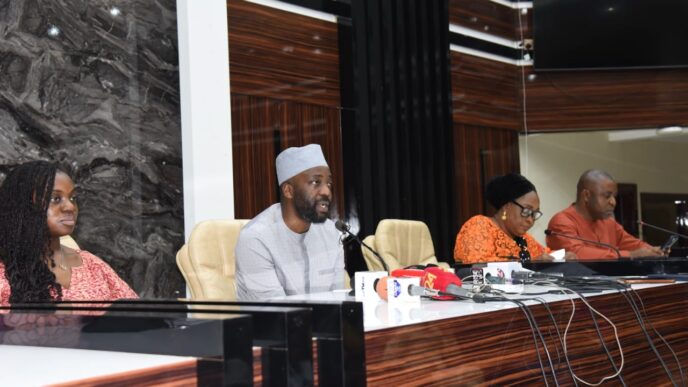
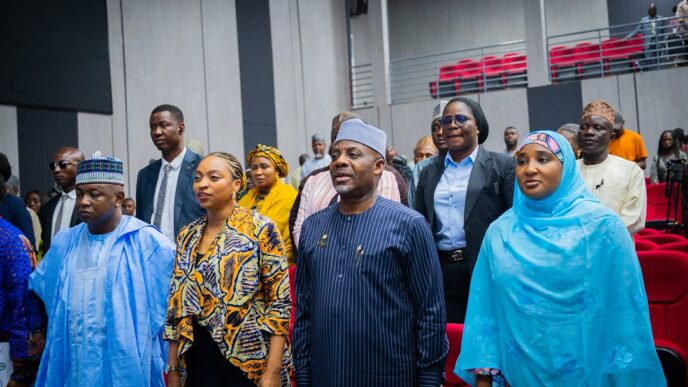
The Minister of State for Education, Prof. Suwaiba Said Ahmad, disclosed this on Friday in Abuja at a ministerial briefing to commemorate the 2026 International Literacy Day, themed “Literacy for People, the Planet and Prosperity.”
Ahmad said the renewed strategy reflects a broader understanding of literacy beyond the ability to read and write, describing it as a foundation for human dignity, economic participation, digital inclusion, vocational development and sustainable national growth.
She said a major breakthrough in the renewed campaign was the restoration of NMEC’s institutional and academic autonomy, which she said would enable the commission to plan more effectively, coordinate mass literacy programmes and strengthen accountability in the delivery of adult and non-formal education.
According to her, the Federal Government is also investing in adult education infrastructure through the rehabilitation of facilities at the National Centre for Adult Education in Kano, the development of infrastructure across the country and plans for a permanent corporate headquarters for NMEC.
The minister said community learning centres were being activated nationwide to take learning closer to people who have been excluded from formal education, particularly in underserved and rural communities.
She explained that NMEC personnel would serve as instructors and facilitators at the centres, providing flexible learning opportunities for young people and adults who could not access or complete formal education.
“The centres will provide flexible, accessible pathways for young people and adults who miss out on formal education,” Ahmad said.
The government’s renewed push, however, comes against the backdrop of a major information gap. The newly appointed Executive Secretary of NMEC, Prof. Dahiru Muhammad Shuni, disclosed that the commission does not currently have up-to-date national data on Nigeria’s literacy rate, with the available figures dating back to 2010.
Shuni described the situation as unacceptable, saying efforts were underway to obtain current and reliable data on the number of Nigerians affected by illiteracy.
The development, he said, would enable the commission and other stakeholders to better understand the scale of the challenge and develop interventions based on current realities.
Ahmad also stressed that government could not tackle the literacy challenge alone, calling for stronger partnerships with state and local governments, development partners, civil society organisations, traditional and religious institutions, the private sector, community leaders and the media.
She said the Federal Government was committed to ensuring that rural communities were not left behind as technology, digital learning and artificial intelligence become increasingly important in education.
“We are ensuring that both rural and urban teachers, because of your location, are not at a disadvantage,” she said.
The minister further charged the new leadership of NMEC to be more proactive and inclusive, urging the commission to work with all sectors and ensure that literacy interventions reach those who need them most.
On Nigeria’s progress towards Sustainable Development Goal 4, which seeks to ensure inclusive and quality education, Ahmad expressed confidence that the country was making significant progress, noting that the goal extends beyond adult literacy to education generally.
Also speaking, the Head of Education Sector at the UNESCO Abuja Office, Mr. Oladeji Adeyemi, said global literacy had improved significantly over the past decade, with more than 88 per cent of the world’s population now able to read and write, compared with about 65 per cent previously.
Adeyemi, however, noted that millions of people worldwide still remain affected by illiteracy. He cited UNESCO-supported programmes in Kano State as an example of how literacy initiatives could be expanded beyond basic reading, writing and numeracy to include health, well-being and family-life education.
As Nigeria marks the 2026 International Literacy Day, the Federal Government said its renewed approach would focus on taking learning opportunities to the doorsteps of underserved Nigerians and transforming literacy into a pathway to dignity, skills, economic opportunity and shared prosperity.



GIPHY App Key not set. Please check settings