


By Jane Salihu
The All Progressives Congress has unveiled a massive maritime and infrastructure blueprint to drive President Bola Tinubu’s ambition of building a $1tn economy by 2030.
The plan hinges on investments in infrastructure, maritime development, energy, manufacturing, human capital and exports.
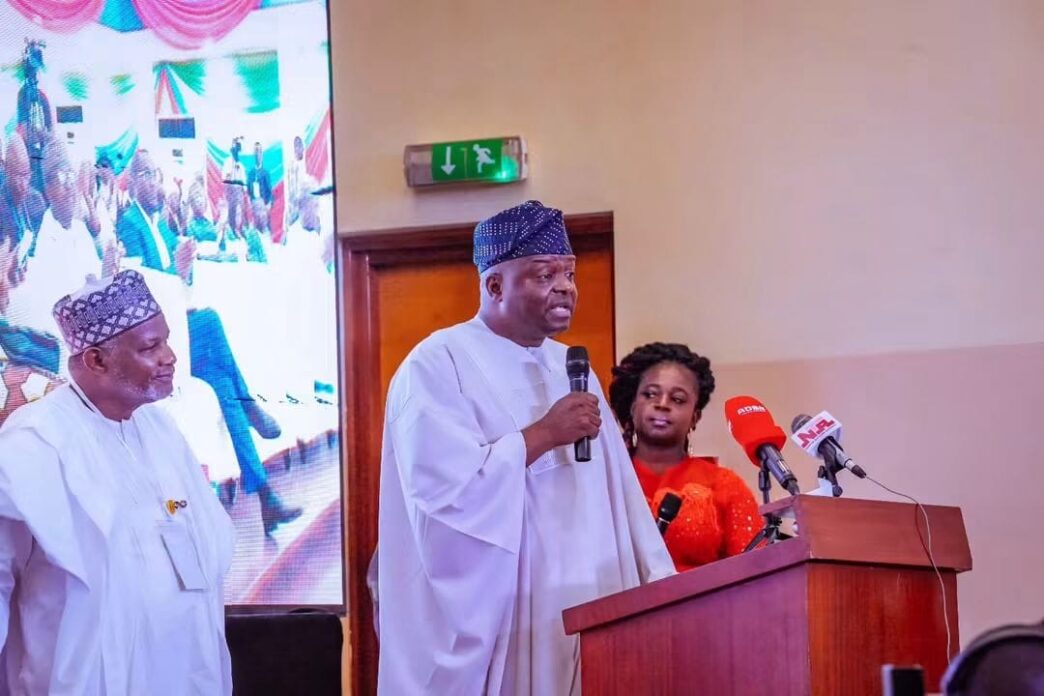
APC National Chairman, Prof. Nentawe Yilwatda, disclosed this on Tuesday in Abuja when he represented President Tinubu at the second edition of the Asiwaju Scorecard Series and Policy Roundtable.
Yilwatda said the $1tn target was not just a figure but a national mission to build a more productive economy.
According to him, the goal is to create jobs, attract investments, boost exports and improve living standards.
He said the administration inherited an economy weighed down by fuel subsidy distortions, multiple exchange rate windows, forex shortages, weak revenue mobilisation and poor infrastructure investment.
He noted that the removal of fuel subsidy and foreign exchange reforms, though painful, were necessary to restore macroeconomic stability.
Yilwatda said the reforms had started yielding results, with external reserves rising to about $52.7bn as of August 2026, alongside improved non-oil revenue and trade balance.
He, however, said the improved indicators would only be meaningful when they translate to cheaper food, more jobs, affordable credit, reliable electricity and stronger purchasing power.
“Macroeconomic stability is not the destination; it is the foundation,” he said.
On the growth blueprint, the APC chairman said Nigeria must unlock its maritime potential through an integrated five-port maritime and logistics corridor.
He listed the corridor to include deep-sea ports in Lagos, Ondo, Ibom, Port Harcourt and Calabar.
Yilwatda said the ports would be linked to major cities, production centres and neighbouring landlocked countries through modern road and rail networks.
This, he said, would position Nigeria as the maritime and logistics hub for West and Central Africa.
Yilwatda added that industrial parks, export-processing zones, agro-processing clusters, logistics hubs and manufacturing centres must be developed along the corridors.
He said this would ensure that infrastructure directly translates into production, jobs, exports and investments.
He also described the Ajaokuta-Kaduna-Kano gas pipeline as critical to industrialisation, noting that Nigeria’s huge gas reserves could power electricity, fertiliser production, transportation and manufacturing.
Yilwatda urged Nigerians, businesses, farmers, youths and investors to support the administration’s economic agenda.
“The work has begun. Now we must take Nigeria from reform to results, from results to growth, from growth to prosperity, and from prosperity to a $1tn economy by 2030,” he said.
The Chairman of the APC Professionals Forum, Dr Isa Yuguda, said fuel subsidy removal had saved the country over N15tn.
Yuguda, a former chairman of the Fuel Subsidy Task Force, said the savings had given federal, state and local governments more fiscal space to invest in education, healthcare, agriculture, security and infrastructure.
He urged Nigerians to be wary of political promises ahead of the 2027 elections, especially proposals to restore fuel subsidy.
According to him, the 2027 elections should be based on achievements and realistic solutions, not promises capable of reversing reforms.
The event was attended by key stakeholders, including the Chairman/Chief Executive Officer of the Nigerians in Diaspora Commission, Abike Dabiri-Erewa, among others.
The roundtable reviewed the performance of the Tinubu administration and policy options ahead of the 2027 elections.
GIPHY App Key not set. Please check settings