


By Jane Salihu
The ECOWAS Parliament has called for stricter enforcement of regional trade protocols, saying effective implementation of existing agreements is critical to unlocking West Africa’s economic potential.
The parliament said full compliance would boost cross-border trade and accelerate regional integration.
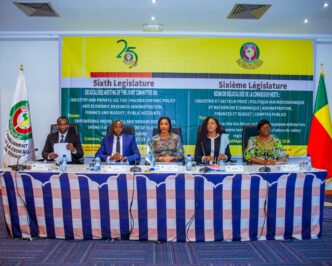
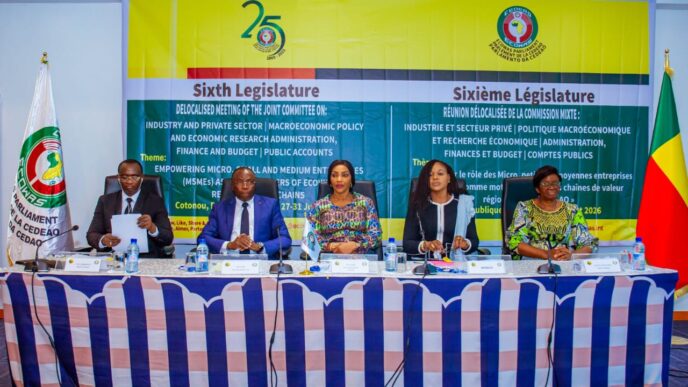
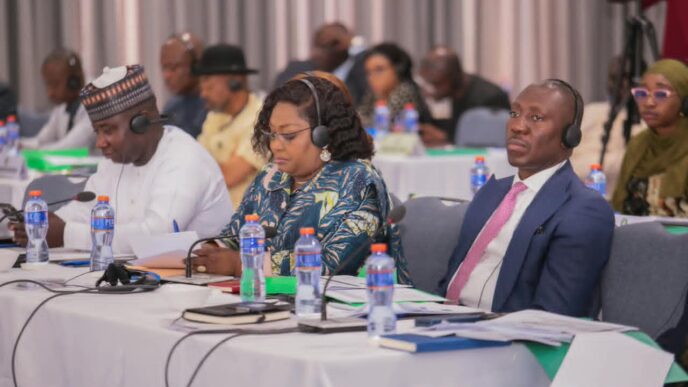
The call was made on Tuesday during the ongoing delocalised meeting of the Joint Committee on Industry and Private Sector, Macroeconomic Policy and Economic Research, Administration, Finance and Budget, and Public Accounts in Cotonou, Benin Republic.
The position of the lawmakers followed a recommendation by Dr Tony Luka Elumelu of the ECOWAS Commission’s Business Council Secretariat, who urged the regional bloc to impose sanctions on member states that fail to comply with trade protocols on free movement of persons, goods and services.
Speaking on the sidelines of the meeting, a Nigerian lawmaker, Hon. Bashiru Dawodu, said West African countries must go beyond policy formulation to full implementation to harness the region’s economic potential.
Dawodu said despite its estimated 400 million population and abundant opportunities, the region had remained fragmented because member states continued to operate independently instead of embracing full integration.
He said, “We have the laws, but implementation remains our biggest challenge. Sometimes there must be consequences for non-compliance. If countries know there are sanctions for failing to implement agreed protocols, they will be more committed to doing the right thing.”
According to him, enforcing compliance with ECOWAS trade agreements will compel governments to remove barriers hindering trade and investment.
He stressed that free movement of persons, goods and services remained fundamental to achieving sustainable economic growth in West Africa.
Dawodu also called for greater inclusion of Micro, Small and Medium Enterprises in regional trade, noting that a large percentage of businesses in the ECOWAS region still operate in the informal sector, limiting their access to finance, regional markets and government support.
He said integrating MSMEs into regional value chains would improve access to funding, strengthen infrastructure and expand cross-border commerce.
Also speaking, a Liberian lawmaker, Hon. Taa Wongbe, urged ECOWAS governments to demonstrate stronger political will by dismantling unnecessary border barriers and faithfully implementing agreements aimed at promoting regional trade.
Wongbe lamented that traders and travellers still experienced long delays and multiple checkpoints at border posts despite decades of integration efforts.
Recounting his experience travelling across several ECOWAS countries, he said persistent roadblocks continued to increase transportation costs and make goods more expensive for consumers.
He proposed the establishment of a parliamentary fact-finding committee to undertake inspection visits to border posts across member states.
He said firsthand assessment of the challenges faced by traders would strengthen the parliament’s engagement with governments and drive practical reforms.
The lawmakers maintained that stronger enforcement of ECOWAS trade protocols would enhance regional integration, improve business competitiveness, create jobs and reduce poverty across West Africa.
They urged member states to match commitments with concrete actions, insisting that only full implementation of regional agreements would deliver the economic transformation envisioned by the ECOWAS community.




GIPHY App Key not set. Please check settings