

Jane Salihu
The Federal Government has revived the National Learning Assessment (NLA) to measure learning outcomes in schools, with the Minister of Education, Tunji Alausa, saying the exercise will serve as a national benchmark for education quality.
Alausa spoke while monitoring the assessment in selected public and private schools in the Federal Capital Territory (FCT). He said the exercise was designed to evaluate pupils’ and students’ proficiency in literacy, numeracy, basic science and cognitive skills.
He said the assessment covered Primary Three, Primary Five and Junior Secondary School Two (JSS2) learners, to determine whether children were acquiring the expected knowledge and competencies at their levels.
Alausa said the exercise would generate credible data to guide policy decisions and targeted interventions aimed at strengthening teaching and learning across the country.
The Minister noted that learning assessments had been conducted in the past but had now been institutionalised to hold every three years for regular monitoring of outcomes.
The minister said the Universal Basic Education Commission had been directed to make budgetary provisions for subsequent assessments from 2029, to guarantee sustainability.
He said the government had also harmonised previously existing assessment models into a single national framework to allow consistent measurement of learning performance over time.
Alausa described the initiative as a key component of the Nigeria Education Sector Renewal Initiative, and said it aligned with President Bola Tinubu’s vision of positioning education as a driver of national development.
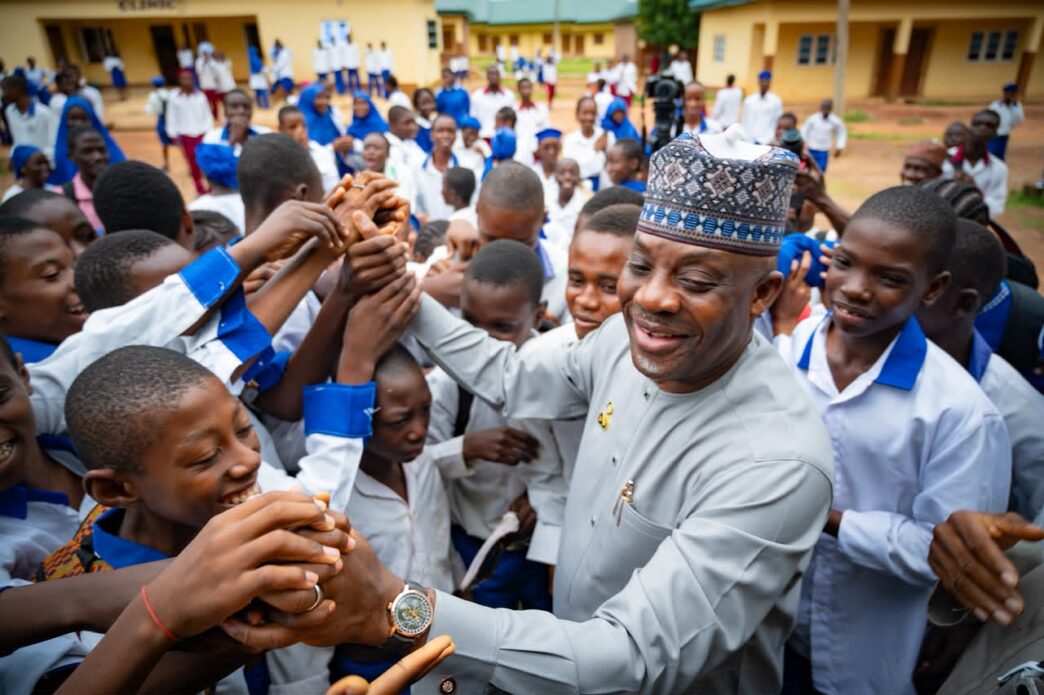
During the exercise, the minister visited Government Secondary School, Kuje, a junior secondary school, and Topaz Model Primary School, a private school, where he expressed satisfaction with the conduct of the assessment and the learning environment.
He commended the FCT Administration for improvements in public school infrastructure, saying the schools visited provided conducive environments for teaching and learning.
Alausa also acknowledged the role of private schools in expanding access to education, saying they had complemented government efforts by keeping children in school, but stressed the need for stronger regulation to ensure compliance with standards.
“We need to ensure not only that children are in school, but that they are actually learning. The results of this assessment will help us identify gaps and implement targeted interventions to improve educational outcomes,” he said.
Also speaking, the FCT Mandate Secretary for Education, Danlami Hayyo, described the assessment as a transformative initiative capable of strengthening Nigeria’s education system.
Hayyo said the FCT Administration had renovated more than 120 public schools under FCT Minister Nyesom Wike, adding that the improved facilities reflected the administration’s commitment to quality education.
He pledged the administration’s continued support for implementing recommendations arising from the assessment.
GIPHY App Key not set. Please check settings