




Jane Salihu
The Senate has called on the Federal Government to take urgent steps to revive Nigeria’s once-thriving textile industry, including imposing a total ban on textile imports and providing increased financial support to local manufacturers.
The resolution followed the adoption of a motion sponsored by Senator Sunday Katung, who expressed concern over the steady decline of an industry that was once a major pillar of Nigeria’s economy and one of the country’s largest sources of employment.
According to the lawmaker, Nigeria’s textile sector flourished during the 1960s, 1970s and 1980s, with about 167 textile mills operating nationwide and providing jobs for nearly 500,000 people.
He noted that Kaduna earned the reputation of being Nigeria’s “Textile City” due to the concentration of major textile companies in the state.
During the debate, senators identified smuggling, weak protection for local industries, high production costs and the influx of imported fabrics as major factors responsible for the collapse of the sector over the years.
In his contribution, Senator Jibrin Isah-Echocho of Kogi East stressed the need for close collaboration between the National Assembly and relevant government agencies to ensure that the Senate’s resolutions translate into concrete action.
Similarly, Senator Ogoshi Onawo of Nasarawa South argued that reviving the textile industry could significantly reduce unemployment and help tackle insecurity by creating opportunities for young Nigerians and boosting agricultural activities linked to cotton production.
Senator Adamu Aliero supported a complete ban on textile imports, insisting that stronger protection for local manufacturers is essential for the industry’s recovery.
He lamented the decline in cotton production, noting that Nigeria once ranked among the world’s leading cotton-producing nations before the collapse of many textile mills.
Following the adoption of the motion, the Senate urged the Federal Government, the Federal Ministry of Industry, Trade and Investment, and the Federal Ministry of Agriculture to implement policies aimed at revitalising textile production across the country.
The upper chamber also called for increased funding for the Bank of Industry to support textile manufacturers and for measures that would encourage farmers to expand cotton cultivation.
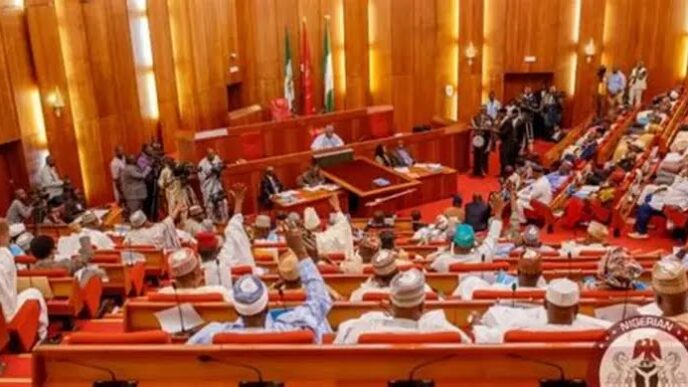
Deputy Senate President Barau Jibrin, who presided over the session, described the textile sector as critical to Nigeria’s economic growth, job creation and industrial development.
Nigeria’s textile industry was once a major contributor to national economic output and a key employer of labour.
However, decades of
infrastructure challenges, smuggling, rising production costs and competition from imported fabrics have led to the closure of numerous textile factories and the loss of thousands of jobs.










GIPHY App Key not set. Please check settings