


Jane Salihu
The 2026 Unified Tertiary Matriculation Examination (UTME) commenced on a largely smooth note at a Computer-Based Test (CBT) centre in Mararaba, Nasarawa State, although one candidate was unable to participate due to fingerprint verification failure.
The nationwide examination organised by the Joint Admissions and Matriculation Board (JAMB) began on Thursday across 966 CBT centres with more than 2.2 million candidates sitting for the test.
At Zinaria International School in Mararaba, one of the centres monitored in Nasarawa State,
the exercise started early with candidates arriving at the premises from 7:00 a.m. for security screening and biometric verification.
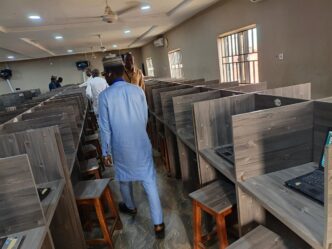
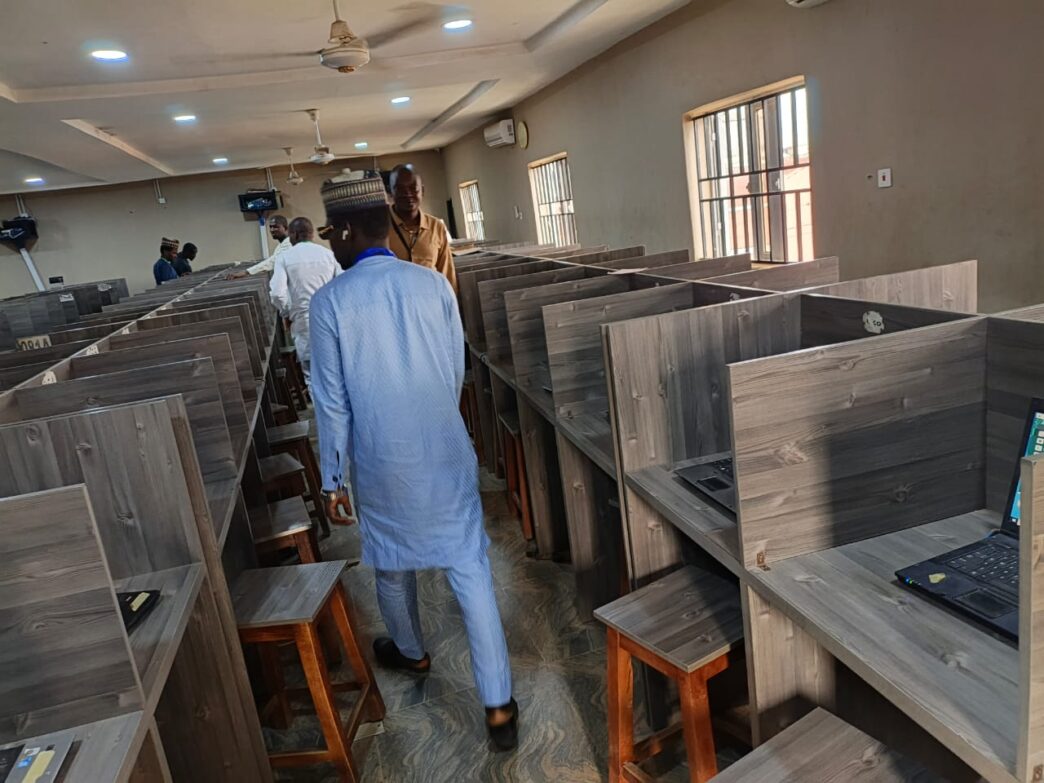
Candidates were cleared at the gate and had their thumbprints captured before being directed to a waiting area. Between 8:00 a.m. and 8:15 a.m., those successfully verified were ushered into the computer halls to begin the first session of the examination in an orderly manner.
However, one candidate could not proceed to the examination hall after repeated attempts to authenticate her fingerprint failed. Officials at the centre asked the candidate to await further communication from the examination body regarding the possibility of participating in a supplementary examination.
The Internal Centre Supervisor, Shehu Abdullahi, explained that the centre had about 600 candidates scheduled in three sessions on the first day, with each session accommodating roughly 200 candidates.
He noted that while the exercise generally went smoothly, there was a slight delay at the beginning due to a technical issue while the system was being populated.
“We were supposed to start by 8:00 a.m., but there was a brief delay while the system was being populated. Our technical team resolved it quickly and the examination commenced within the stipulated time,” Abdullahi said.
Abdullahi also identified biometric verification as one of the recurring challenges during the UTME, noting that some candidates often struggle with fingerprint authentication during the verification process.
He further called for the upgrade of computer systems at the centre, explaining that some of the available computers were outdated and slow to boot.
“The truth is that the centre needs more modern systems. Some of the computers take time to come on, and newer systems would help speed up the process and improve efficiency,” he added.
Security presence was also noticeable at the centre, with officers of the Nigeria Security and Civil Defence Corps (NSCDC) stationed around the premises to monitor compliance with examination guidelines and prevent candidates from bringing prohibited items into the facility.
Speaking on the conduct of the exercise, Assistant Commandant General, Maxwell Ugafor expressed satisfaction with the level of orderliness observed.
“From what we have seen so far, the process is orderly and candidates are complying with the rules. Our personnel are here to ensure that the examination environment remains secure,” Ugafor stated.
He also commended JAMB for the steady improvements in the conduct of the examination over the years, noting that security agencies would continue to monitor centres nationwide to identify and address any lapses.
Meanwhile, all efforts to speak with the centre’s technical officer for comments on the initial difficulty experienced in getting the computer systems fully operational were unsuccessful as of the time of filing this report.










GIPHY App Key not set. Please check settings