


Jane Salihu
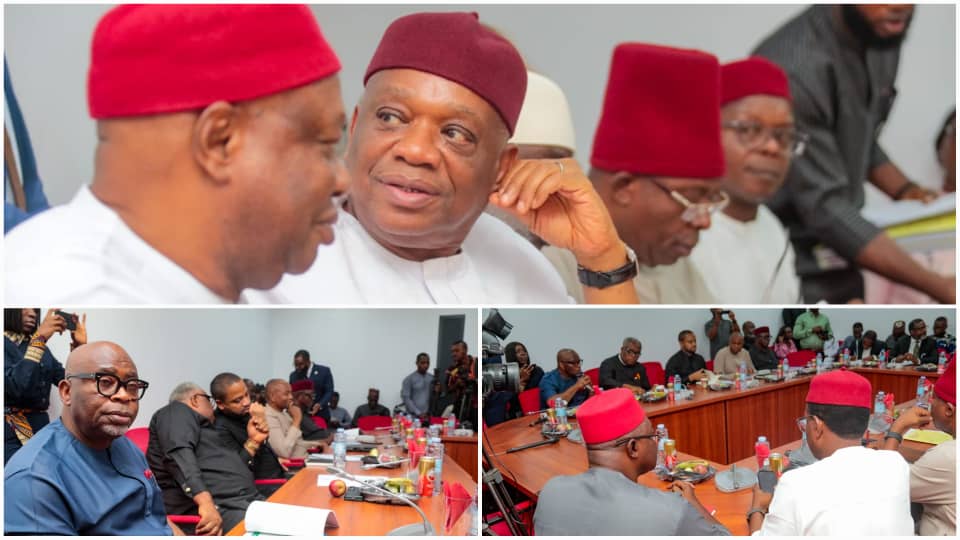
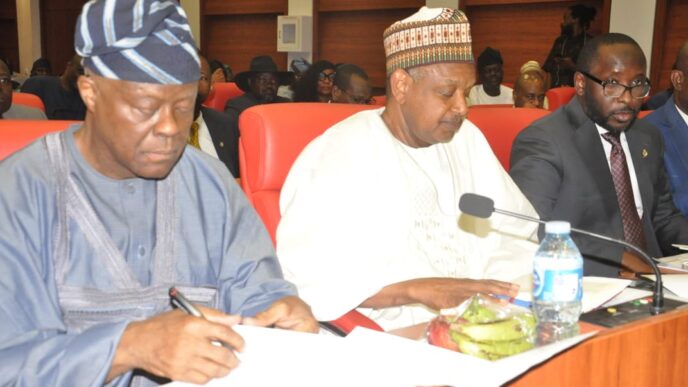
The Senate on Tuesday approved the ₦140 billion 2026 budget proposal of the South East Development Commission (SEDC), urging the Commission to prioritise infrastructure delivery to drive regional development, where Lawmakers cautioned that limited resources must be channelled into impactful projects, particularly in roads, gas, rail and industrial facilities, while stressing accountability, security outcomes and urgent ecological interventions.
Presenting the budget at the National Assembly, Managing Director and Chief Executive Officer of the SEDC, Mr. Mark Okoye, said the financial plan was anchored on infrastructure renewal, industrialization, private sector–driven growth and regional integration. He disclosed that 76 per cent of the proposal is dedicated to capital expenditure, with the rest allocated to recurrent costs and personnel expenses.
“The Commission is focused on building a $200 billion South East economy by 2035, driven by infrastructure, industry and investment,” Okoye said, unveiling plans for a proposed South East Investment Corporation to mobilise up to $150 billion in capital and attract global investors.
He explained that despite zero capital releases in 2025, the Commission utilised the period to prepare feasibility studies and bankable documents, including a proposed regional gas pipeline network estimated at between $1.5 billion and $2 billion, aimed at reviving industrial clusters across the region.
The budget outlines strategic pillars including infrastructure development, economic empowerment, environmental sustainability, social development and security. Key allocations include funding for a South East Venture Capital Fund, youth entrepreneurship initiatives, community development programmes, regional security projects and leadership fellowships.
However, senators raised concerns about security and environmental funding, particularly the ₦500 million earmarked for climate sustainability in a region plagued by severe erosion.
Senator Tony Nwoye warned that “without security, development will not yield results,” demanding clarity on how the ₦2.5 billion security programme would translate into visible improvements and collaboration with security agencies.
He also cautioned against politicization of the venture capital fund, insisting it must operate strictly on merit to support genuine innovators in commercial hubs such as Aba, Onitsha and Nnewi. “We must not spend on unrealistic events while neglecting infrastructure and grassroots development,” Nwoye said.
Senator Kenneth Eze urged the Commission to adopt private-sector discipline in managing public funds, warning against spreading resources thin across multiple projects. “Match what you have with what is achievable to avoid abandoned projects,” he advised.
Senator Ezenwa Onyewuchi expressed concern over personnel allocations and salary obligations, seeking assurances that staff remuneration was being paid promptly. “Unpaid salaries will undermine morale and damage public confidence,” he warned, calling for transparency in recruitment and payroll management.
Other lawmakers expressed optimism about the Commission’s direction. Senator Victor Umeh described the proposal as visionary, while Senator Emmanuel Nwachukwu stressed the need for inter-state coordination on rail, gas pipelines and industrial parks, noting that gas infrastructure is critical to industrial revival.
Senator Osita Ngwu encouraged the management to focus on foundational projects, saying, “Take the pain and build the foundation. History will thank you”, expressing confidence in the leadership team and urged them to implement the programmes with diligence.
Chairman of the Senate Committee on the Commission, Senator Orji Uzor Kalu, commended the budget as a “bankable document” capable of attracting global financing institutions. He warned, however, that the Commission must not become a platform for political patronage. “This Committee will be ruthless in oversight. We will not look at anybody’s face. This Commission must rekindle hope and drive development,” Kalu declared.
Kalu also emphasised unity among the Commission’s leadership and readiness for oversight visits, noting that feasibility studies were critical for attracting institutions such as the World Bank and Afreximbank.
He urged the Commission to improve the document further and align projects with national borrowing frameworks.
GIPHY App Key not set. Please check settings