


Jane Salihu
Minister of Marine and Blue Economy, Dr. Adegboyega Oyetola, has warned that Nigeria’s maritime sector could face rising logistics costs, port inefficiencies and food security challenges unless funding for the sector is significantly improved, as he presented a ₦10.5 billion budget proposal for the ministry’s 2026 operations.
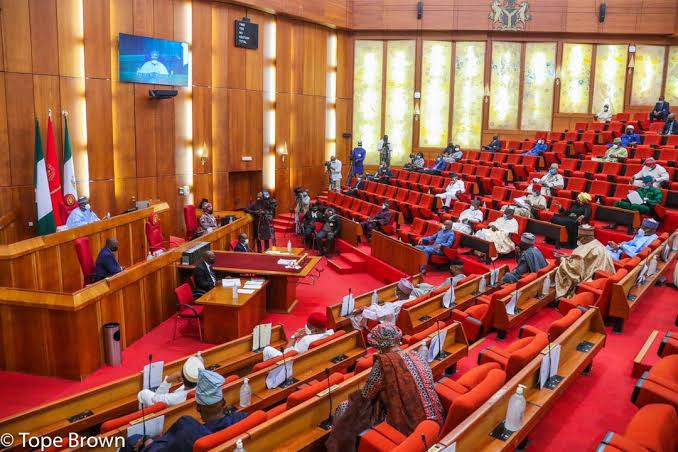
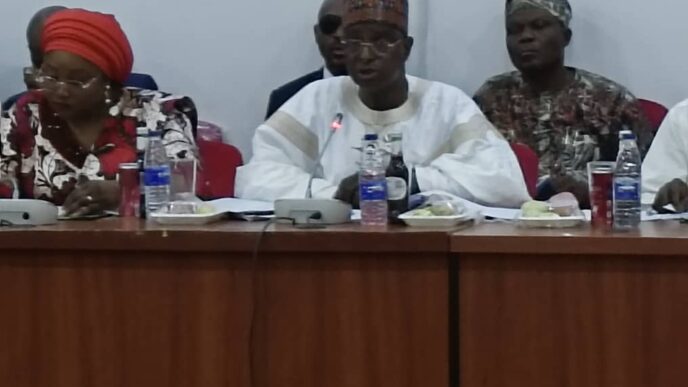
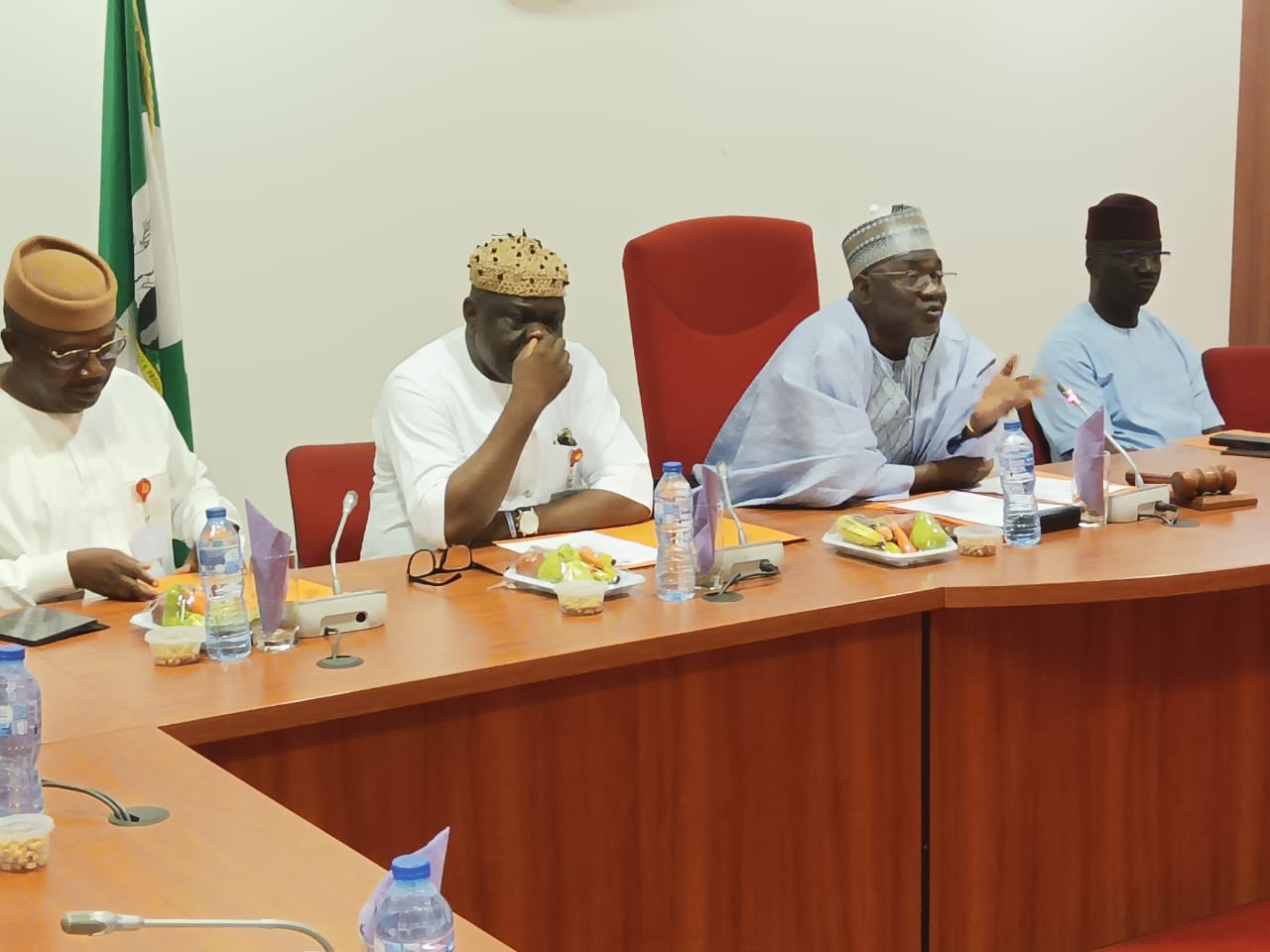
Oyetola disclosed this on Tuesday while defending the ministry’s budget before a joint session of the Senate Committee on Marine Transport and relevant House of Representatives committees, describing the allocation as inadequate for a sector that underpins Nigeria’s trade and economic competitiveness.
He explained that the proposed budget consists of ₦8.24 billion for capital projects, ₦453.86 million for overhead costs and ₦1.81 billion for personnel expenses, noting that the funding level would only keep the ministry operational without driving the reforms and growth required in the maritime industry.
The minister said the ministry supervises key subsectors such as ports, shipping, inland waterways, fisheries and aquaculture, which together account for more than 90 per cent of Nigeria’s international trade by volume and play a critical role in food and nutrition security, adding that despite being largely self-funded, agencies including the Nigerian Ports Authority, Nigerian Maritime Administration and Safety Agency and Nigerian Shippers’ Council were constrained by excessive deductions at source by the Office of the Accountant-General of the Federation.
According to him, the deductions have reduced liquidity and operational flexibility, contributing to port congestion, higher logistics costs, delayed cargo clearance, revenue losses and inflationary pressures, stressing that the issue had evolved into a broader national economic concern.
Oyetola also faulted the Budget Office for placing the Council for the Regulation of Freight Forwarding in Nigeria (CRFFN) under the Federal Ministry of Transportation instead of the Marine and Blue Economy Ministry, saying the misclassification undermined policy coherence in the maritime logistics chain.
He called for increased funding for inland waterways to reduce accidents and improve safety, noting that water transport is significantly cheaper than road haulage and that Nigeria’s dependence on roads for over 80 per cent of freight movement had worsened infrastructure deterioration and elevated the cost of goods.
On fisheries and aquaculture, saying Nigeria’s fish demand of over 3.6 million metric tonnes annually far exceeds domestic production of about 1.4 million metric tonnes, forcing imports worth more than $1 billion yearly. He added that post-harvest losses of up to 30 per cent further reduce supply, pledging that the ministry is working to boost local production and cut imports.
He revealed that the ministry received only ₦202.47 million out of its revised ₦3.53 billion capital budget in 2025, representing about 1.7 per cent, while overhead releases stood at 35 per cent.
Oyetola said discussions were ongoing with the Ministry of Budget and Economic Planning to bridge funding gaps in line with the Federal Government’s economic diversification agenda.
Responding, Chairman of the Senate Committee on Marine Transport, Senator Wasiu Eshilokun, assured lawmakers would scrutinise the proposals, noting that the marine and blue economy remains vital to Nigeria’s development and economic resilience.
GIPHY App Key not set. Please check settings