


Jane Salihu
The Inspector-General of Police, IGP Olatunji Rilwan Disu, has proposed a direct information-verification channel between the Nigeria Police Force and the Crime Correspondents Association of Nigeria (CCAN) to enable journalists to confirm security-related reports quickly ahead of the 2027 general elections.
Disu said the arrangement would provide accredited crime correspondents with a reliable means of checking information with the police before publication, warning that fabricated videos, false casualty figures and misleading statements could create panic, deepen public distrust and trigger security crises even when no actual attack had occurred.
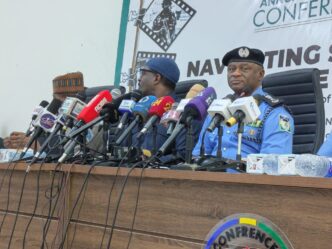
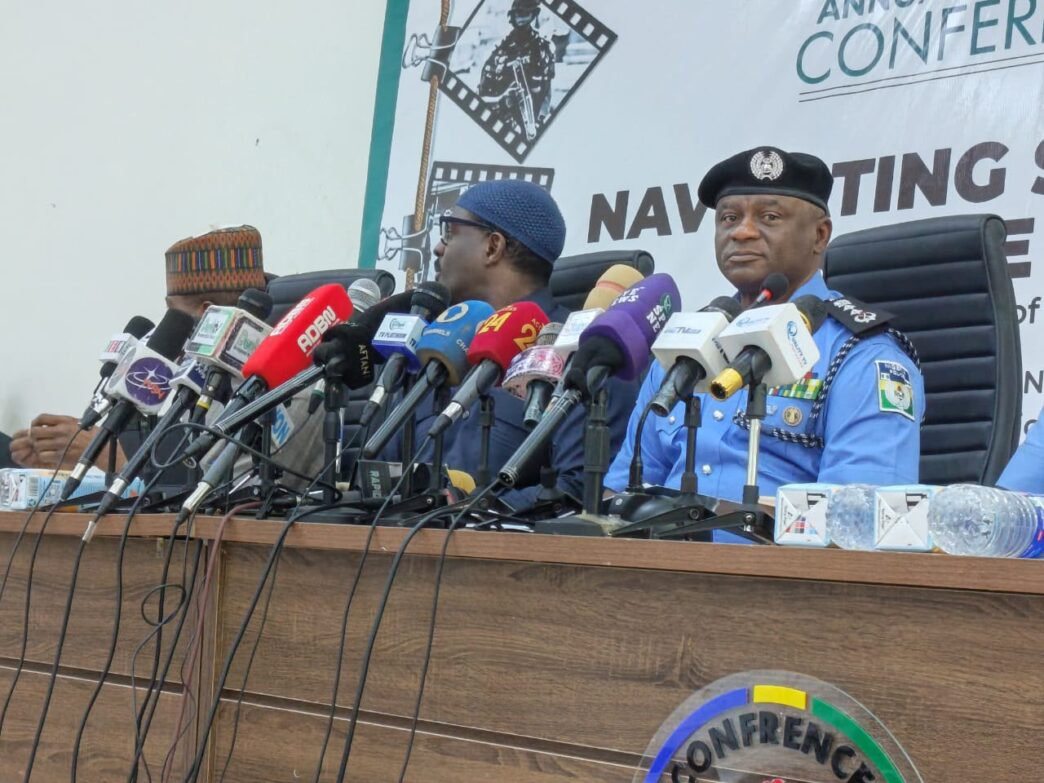
Speaking at the 3rd Annual Conference and Awards of CCAN, Disu illustrated the danger with an incident involving an old video from another location that was circulated as a fresh attack. The misleading footage reportedly caused residents to call their children home and shut down businesses, although no attack had taken place.
He also recalled an incident during his time as commander of the Rapid Response Squad in Lagos, when a journalist brought him a photograph of an officer buying a local drink before publishing it. Further investigation showed that the officer had actually bought water, which was kept in a container that could easily have been misrepresented in a news report. Disu said the journalist’s decision to verify the facts prevented a misleading story.
The IGP, who spoke on the theme, “Navigating Security Challenges in the 2027 Election: The Role of the Media in Combating Fake News,” urged journalists to distinguish verified facts from claims, avoid circulating videos whose origins cannot be established and give security agencies an opportunity to respond before publishing sensitive reports. He stressed that these principles were not restrictions on press freedom but essential elements of responsible journalism, particularly during an election period.
He disclosed that the police, through the National Cybercrime Centre and digital forensic operations, were monitoring online platforms and had identified and arrested individuals behind fabricated notices and videos. However, he maintained that enforcement measures would be applied sparingly and only where public safety was genuinely threatened, not to suppress criticism or dissent.
Disu described journalists as indispensable partners in national security, saying the police needed the media to report both their successes and failures accurately. He cautioned that information gaps allowed rumours to spread, while sensational and unverified reports could undermine public confidence in security institutions and the electoral process.
Also speaking, the Director-General of the Voice of Nigeria, Jibrin Baba Ndace, said the credibility of traditional media would increasingly depend on its ability to provide verification, context and sound editorial judgment in an environment where manipulated images, videos and artificial intelligence-generated content could spread rapidly.
Ndace urged journalists to adopt the principle, “Stop, Check, Confirm, Report,” insisting that information should not be published when its authenticity could not be established. He said photographs and videos stripped of their original context could be used to create false narratives, mislead the public and damage the reputation of individuals and institutions.
He also cautioned against allowing personal feelings, political preferences or hostility towards public officials to influence news reporting. According to him, journalists must hold institutions accountable without condemning entire security agencies because of the misconduct of individual officers. He added that artificial intelligence could support newsroom operations but could not replace human judgment, professional discipline and editorial responsibility.
Ndace further called for sustained investment in journalists’ training, digital literacy and newsroom capacity, as well as stronger partnerships between media organisations and security agencies to ensure timely access to accurate information. He warned journalists against allowing individuals with undisclosed agendas to use their platforms to spread misleading narratives.
Earlier, CCAN Chairman, Festus Ejiroghene Fifen, called for improved welfare, safety equipment and specialised training for crime correspondents, arguing that journalists who risk their lives reporting security operations should not be neglected in the nation’s efforts to combat misinformation.
Fifen lamented that while substantial resources were often spent on catering, decorations and souvenirs at security events, journalists expected to provide coverage were frequently left without adequate protective equipment, logistics, life insurance or professional development opportunities.
“Journalism cannot feed on souvenirs, and capacity cannot be built on a plate of rice and periodic handouts,” he said, urging security agencies and other stakeholders to redirect resources towards training in fact-checking, digital forensics and crisis reporting, as well as safety kits and modern press centres equipped with reliable internet and real-time verification tools.
He also recommended institutionalising conflict-sensitive journalism and involving crime correspondents in pre-election security simulations and scenario-building exercises to ensure that communication strategies are aligned with operational security plans.
Fifen said crime correspondents played a critical role in translating complex security operations into information the public could understand, while holding security institutions accountable to professional standards and respect for human rights. He urged government and security agencies to regard the media as strategic partners rather than adversaries, stressing that the welfare of journalists should receive greater attention than the fanfare surrounding official events.
The conference brought together security officials, media professionals and other stakeholders to examine the challenges of misinformation and the media’s responsibility in promoting a peaceful and credible electoral process ahead of the 2027 general elections.







GIPHY App Key not set. Please check settings