


Jane Salihu
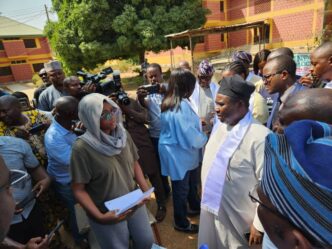
Ahead of the February 21 Area Council elections in the Federal Capital Territory (FCT), the Independent National Electoral Commission (INEC) has intensified preparations with a territory-wide mock accreditation exercise, as its Chairman, Prof. Joash Amupitan, assured voters that the commission is technologically and operationally ready for the polls.
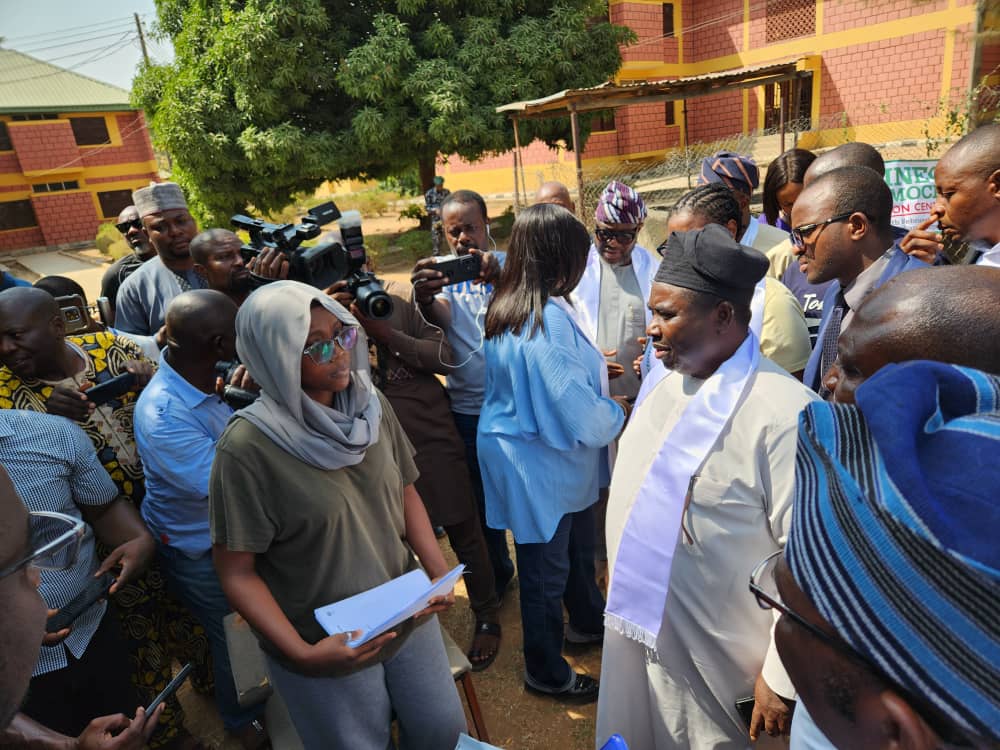
Prof. Amupitan led a high-level delegation of National Commissioners and the FCT Resident Electoral Commissioner (REC) on an on-the-spot assessment of polling units and training centres, including Government Secondary School Garki, LEA Primary School Ushafa, Sagwari Primary School in Dutse, and other designated locations where supervisors and presiding officers were undergoing training.
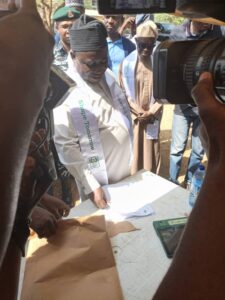
The mock exercise was conducted to test the efficiency of the upgraded Bimodal Voter Accreditation System (BVAS), which the INEC Chairman described as a critical tool for safeguarding the integrity of the electoral process. He said the commission deliberately organised the simulation to identify and resolve any operational gaps ahead of election day.
“We don’t want to use the main election as a guinea pig. This exercise is to test our operational preparedness, especially the functionality of the BVAS, which for us is a game changer,” Prof. Amupitan told journalists during the monitoring tour.
He expressed satisfaction with the speed and accuracy of the accreditation process, noting that voters were accredited within five seconds or less. The system also successfully prevented a simulated attempt at double accreditation, reinforcing its capacity to curb electoral fraud. “With this technology, there is no way you can be accredited twice. There is no way you can vote twice,” he said.
Beyond technology, the INEC Chairman inspected the training of Supervising Presiding Officers (SPOs) and other ad hoc staff, stressing the importance of human resource readiness.
He confirmed that non-sensitive election materials had already been distributed to the Area Councils to ensure early deployment on election day.
Addressing concerns about poor network coverage in rural and hard-to-reach areas, Prof. Amupitan disclosed that the commission had introduced contingency measures to guarantee seamless results transmission. “We have worked on all the necessary operational protocols and security measures, and presiding officers now have provisions for personal hotspots to bypass internet connectivity issues,” he explained.
He further clarified that the BVAS is configured to automatically upload polling unit results to the INEC Results Viewing (IReV) portal once network connectivity is detected, thereby strengthening transparency and public confidence in the electoral process.
While commending the technical success of the mock exercise, the INEC Chairman expressed concern over the low turnout of voters during the simulation and urged political parties and stakeholders to intensify mobilisation efforts.
He also advised calm amid ongoing legislative debates on electronic transmission of results, noting that the National Assembly must complete harmonization processes before any final decision, cautioning against “unnecessary tension” ahead of the polls.








GIPHY App Key not set. Please check settings